Japan has spent decades being associated with extremely low interest rates.
That is changing.
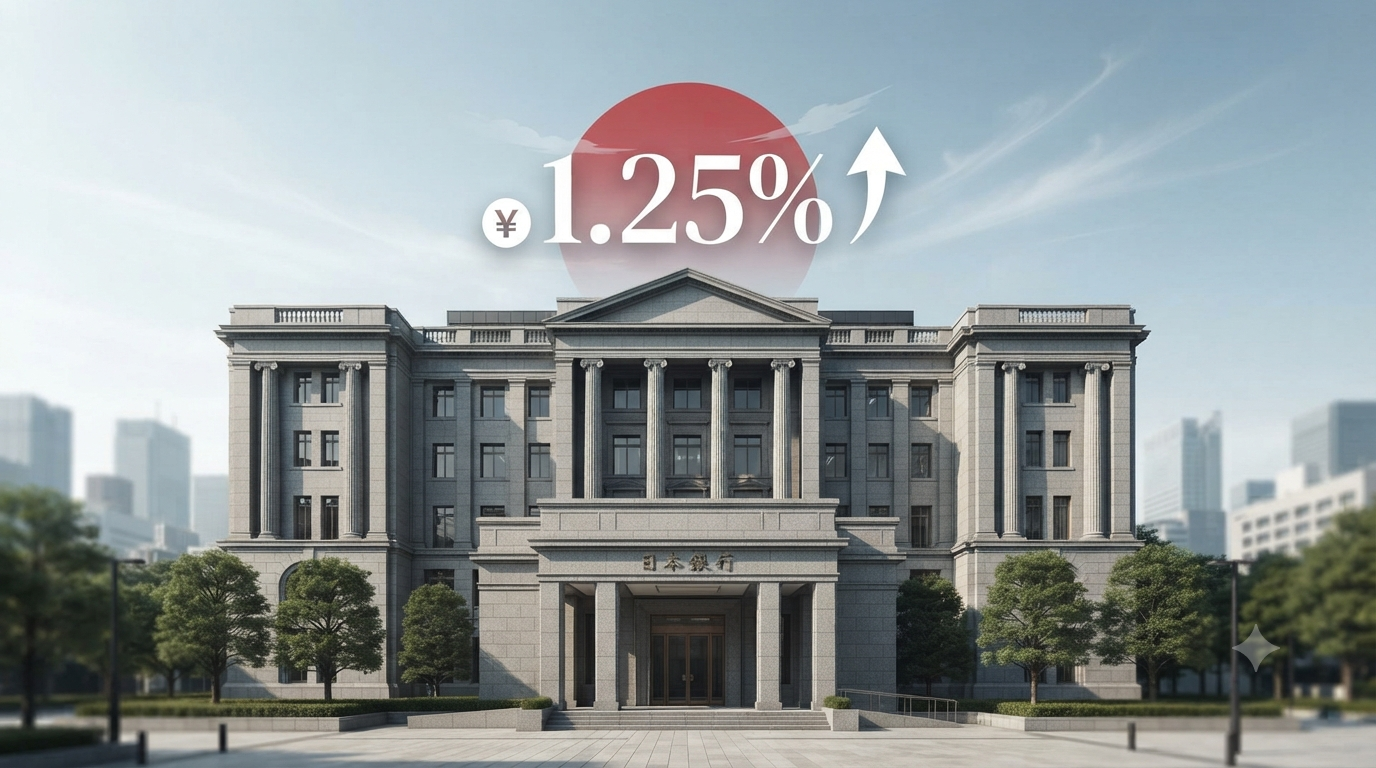
On September 18, 2026, the Bank of Japan raised its policy interest rate by 25 basis points, from 1.00% to 1.25%. The decision took Japan's policy rate to its highest level in about 31 years and was approved by a 7–2 vote of the BOJ Policy Board.
On the surface, a 0.25 percentage-point increase in another country's interest rate may appear irrelevant to an Indian household or investor.
But Japan is different.
For years, very low Japanese interest rates helped make the yen one of the world's important funding currencies. Investors could borrow cheaply in yen and invest that money in higher-returning assets elsewhere.
As Japanese interest rates rise, that equation begins to change.
The real question is therefore:
Could higher Japanese interest rates gradually change global liquidity, currencies and investor risk-taking—and what could that mean for India?
What Happened?
The Bank of Japan raised its target for the uncollateralised overnight call rate from around 1.00% to 1.25% at its September monetary-policy meeting.
This was not Japan's first rate increase of 2026.
The BOJ had already raised the policy rate to 1.00% in June 2026, after keeping it at 0.75% earlier in the year. The September increase therefore represents another step in Japan's gradual move away from the ultra-loose monetary policy that characterised much of the previous few decades.
The September decision was also not unanimous.
Two of the nine Policy Board members opposed the increase, highlighting disagreement over how quickly the BOJ should tighten monetary policy.
That disagreement later became important for financial markets.
Why Is Japan Raising Interest Rates?
For much of modern Japanese economic history, the country's problem was not excessive inflation.
It was the opposite.
Japan struggled for years with weak inflation, periods of deflation, slow wage growth and limited domestic demand. The Bank of Japan responded with unusually loose monetary policy—including negative interest rates and large-scale asset purchases—to encourage borrowing, spending and investment.
The economic environment has gradually changed.
Japan's August 2026 consumer-price data showed:
- headline inflation of 1.9% year-on-year
- inflation excluding fresh food of 1.7%
- inflation excluding both fresh food and energy of 1.9%
Those numbers are currently around the BOJ's long-standing 2% price-stability objective rather than dramatically above it.
But the BOJ is also looking forward.
Higher energy and import costs, exchange-rate weakness and the possibility of broader price pressures create a risk that inflation could accelerate again. BOJ officials have increasingly discussed the need to prevent inflation from moving materially above target rather than continuing to focus only on creating inflation.
Japan's economy has also shown enough resilience to give the BOJ room to tighten.
Revised data showed Japan's economy expanded at an annualised 1.4% rate in the April–June 2026 quarter, equivalent to 0.4% growth from the previous quarter, although household consumption remained relatively subdued.
The BOJ is therefore trying to achieve a difficult balance:
control inflation without tightening so aggressively that it damages economic growth.
Why Is a 1.25% Rate Such a Big Story?
For an Indian reader accustomed to considerably higher interest rates, 1.25% may still sound extremely low.
And it is low compared with many major economies.
But financial markets react not only to the absolute level of an interest rate.
They react to the change in direction.
Japan spent years supplying the global financial system with extraordinarily cheap money.
The significant development is therefore not simply:
“Japan's interest rate is now 1.25%.”
It is:
“The cost of borrowing Japanese money is gradually increasing after decades of unusually cheap funding.”
That has implications beyond Japan.
The Important Concept: What Is the Yen Carry Trade?
To understand why global investors watch the Bank of Japan so closely, we need to understand the yen carry trade.
A carry trade works roughly like this:
An investor borrows money in a currency where interest rates are low.
The investor then converts that money into another currency and invests it in an asset offering a higher return.
Japan's very low rates made the yen particularly attractive for this strategy.
In simplified form:
Borrow cheaply in yen → convert the money → invest in higher-yielding bonds, currencies, equities or other assets.
The investor hopes to earn the difference between the cheap funding cost and the higher return elsewhere.
Reuters notes that yen-funded carry trades expanded significantly when the U.S. Federal Reserve raised rates sharply while the BOJ maintained exceptionally low rates. The exact size of the carry trade cannot be measured precisely; cross-border yen borrowing is sometimes used as one proxy rather than a direct measurement of carry positions.
This distinction is important.
Not every yen loan is a speculative carry trade.
But Japan's low borrowing costs have nevertheless been an important component of global financial liquidity.
What Happens When Japanese Interest Rates Rise?
Higher Japanese rates can affect a carry trade in two ways.
1. Borrowing becomes more expensive
If the cost of borrowing yen rises, the profit available from investing that borrowed money elsewhere becomes smaller.
2. The yen could strengthen
This can be even more important.
Imagine an investor borrows yen and converts it into dollars.
Later, the investor must buy yen again to repay the loan.
If the yen has become substantially stronger, buying those yen becomes more expensive.
A trade that originally looked profitable can therefore become unattractive—or even loss-making.
When many investors try to exit similar positions simultaneously, they may sell other financial assets and buy yen to repay funding.
That process is known as carry-trade unwinding.
And because the assets being sold can exist across different countries and markets, a Japanese monetary-policy change can potentially create volatility far outside Japan.
We Have Seen This Risk Before
The concept is not merely theoretical.
In 2024, a rapid adjustment in yen-funded carry trades contributed to a sharp increase in volatility across global financial markets. Reuters reported at the time that concerns around the unwinding of yen-funded positions amplified selling across equities and other assets.
That historical episode does not mean the same thing must happen again in 2026.
Today's economic conditions, positioning and market expectations are different.
But it explains why investors pay close attention whenever the BOJ changes policy.
Then Why Did the Yen Fall After the Rate Hike?
This is one of the most interesting parts of the September decision.
Normally, higher interest rates can support a currency because investors receive a greater return for holding assets denominated in that currency.
Yet the yen weakened after the BOJ raised rates.
Immediately after the decision, the yen weakened to around 156.75 per U.S. dollar, and it later traded above 157. Reuters reported the dollar reaching as high as approximately 158.05 yen during the September 18 session.
By September 22, the yen was trading around 157.33 per dollar.
Why?
Because financial markets often react to the difference between:
what happened
and
what investors had already expected to happen.
The 1.25% increase had been widely anticipated.
More importantly, two BOJ policymakers opposed the increase, and Governor Kazuo Ueda's communication did not convince markets that Japan would necessarily accelerate future tightening.
At the same time, U.S. interest rates remain substantially higher than Japanese rates.
Reuters reported on September 22 that the U.S.–Japan policy-rate gap remained roughly 275 basis points, still giving investors an incentive to consider yen-funded carry strategies.
So the market interpreted the BOJ's message as:
Japan is tightening—but perhaps not aggressively enough to eliminate the interest-rate gap quickly.
That is why a rate hike and a weaker yen were able to occur simultaneously.
Why Does This Matter to Global Investors?
Japan is one of the world's largest economies and one of the largest sources of global capital.
When Japanese interest rates were extremely low, investors had strong incentives to seek higher returns overseas.
If Japanese yields become increasingly attractive, two related changes could gradually occur.
Japanese investors may find domestic assets more attractive
Higher yields on Japanese bonds could reduce the relative advantage of holding some foreign investments.
International investors may reconsider yen-funded leverage
If borrowing yen becomes more expensive—or if investors fear a sharp yen appreciation—the risk-reward calculation behind carry trades changes.
Neither process necessarily happens suddenly.
But both can affect global liquidity.
Could Japanese Money Return Home?
This is another important market question.
Japan has accumulated enormous overseas investments over decades.
If Japanese interest rates and bond yields rise sufficiently, Japanese institutions may gradually find domestic assets more attractive relative to foreign bonds and other investments.
Markets call this capital repatriation.
There was already speculation in September about whether major Japanese institutional investors could shift portions of portfolios back toward domestic investments as Japanese yields rose.
However, this should not be exaggerated.
A higher BOJ rate does not automatically mean trillions of dollars suddenly leave global markets.
Large pension funds, insurers and institutional investors manage portfolios according to long-term objectives, liabilities, hedging costs and regulatory requirements.
Any repatriation could therefore be gradual.
But the direction of travel still matters.
For decades, investors asked:
“Where can Japanese money earn a better return overseas?”
Increasingly, they may also ask:
“Are returns inside Japan becoming attractive again?”
What Could This Mean for India?
The direct impact of a single Japanese rate increase on Indian equities is limited.
Indian markets are influenced simultaneously by domestic earnings, RBI policy, crude oil, the rupee, foreign and domestic flows, U.S. interest rates, global growth and many other factors.
It would therefore be misleading to say:
“BOJ raised rates, so Indian markets must fall.”
That is not how global markets work.
The impact on India is better understood through several possible transmission channels.
1. Global Liquidity and Foreign Investor Risk Appetite
If yen-funded leverage is reduced, international investors may sell some risk assets to repay borrowing or reduce leverage.
Emerging-market equities can be affected during periods of broad global risk reduction.
India may therefore experience volatility indirectly through foreign portfolio flows.
History shows that yen carry-trade adjustments can spill across international markets, although India's actual exposure and vulnerability can differ substantially from other countries.
This is a global-liquidity risk, not a prediction that foreign investors must sell Indian equities.
2. Indian Equity Market Volatility
A sudden strengthening of the yen or unexpectedly aggressive BOJ tightening could cause investors globally to reduce leveraged positions.
In such an environment, highly valued and risk-sensitive assets can experience greater volatility.
However, India's market performance around the September BOJ decision illustrates why individual causes should not be overstated.
On September 18, the Nifty 50 actually gained about 0.33% for the day, although Indian equities completed a sixth consecutive weekly decline amid a broader combination of high crude-oil prices and tightening global monetary conditions.
So the BOJ is one part of the global liquidity picture—not a standalone explanation for every move in the Nifty or Sensex.
3. The Indian Rupee
Changes in global carry trades can also influence currency markets.
When global investors reduce risk, demand for the U.S. dollar can increase and emerging-market currencies may face pressure.
During the 2024 carry-trade unwind, the Indian rupee was among currencies affected by broader global positioning changes, although domestic factors and RBI intervention also played important roles.
Again, the relationship is not mechanical.
A BOJ rate hike does not automatically mean a weaker rupee.
Investors should instead watch how the yen, dollar, global risk appetite and foreign capital flows interact.
4. Global Bond Yields
Japan is an important participant in global bond markets.
If Japanese government bonds begin offering more attractive yields, Japanese investors could have less incentive to buy certain overseas bonds.
In theory, lower demand for foreign bonds can contribute to upward pressure on overseas yields.
Higher global bond yields can then influence:
- equity valuations
- borrowing costs
- foreign investor allocation
- emerging-market capital flows
For India, this matters because Indian financial markets do not operate independently of global interest-rate conditions.
5. Indian Companies With Yen Exposure
Companies or institutions that have borrowed directly in Japanese yen face a more direct impact.
Two variables matter:
Japanese interest rates and the yen exchange rate.
If yen borrowing becomes more expensive, future financing costs can rise.
If the yen strengthens against the rupee, repayment of unhedged yen-denominated liabilities can also become more expensive in rupee terms.
The actual effect depends heavily on whether the borrower has hedged the currency exposure and on the structure and maturity of the debt.
So this is a company-specific financial risk rather than a blanket risk to all Indian businesses.
Does This Mean the Yen Carry Trade Is Ending?
Not necessarily.
Even after the latest rate hike, Japan's policy rate remains materially below U.S. rates.
As of September 22, Reuters estimated the policy-rate gap between the United States and Japan at roughly 2.75 percentage points. The continuing yield differential was still supporting interest in yen-funded carry trades.
So the carry trade has not automatically disappeared.
What has changed is its risk profile.
For years, investors could assume that Japanese rates would remain extremely low.
That assumption is becoming less reliable.
The carry trade may therefore remain profitable under some conditions, but investors must increasingly account for:
- higher Japanese funding costs
- greater yen volatility
- possible BOJ tightening
- possible currency intervention
- changing U.S.–Japan interest-rate differentials
In other words:
The yen may still be a cheap funding currency, but it is no longer as predictable as it once was.
Short-Term Interpretation
In the near term, the September decision alone may not be enough to trigger a major global liquidity shock.
The rate increase was widely expected.
The yen actually weakened after the announcement because markets considered the BOJ's future guidance relatively cautious.
And the interest-rate advantage available outside Japan remains meaningful.
That means the immediate risk is probably less about the 1.25% rate itself and more about what happens next.
If the BOJ becomes unexpectedly aggressive—or if the yen strengthens rapidly—the pressure on carry trades could increase.
Long-Term Interpretation
The longer-term development is more significant.
Japan appears to be moving away from the assumption that interest rates will remain near zero indefinitely.
A sequence that began with Japan exiting negative rates has progressed toward rates of 0.5%, 0.75%, 1.0% and now 1.25%.
The exact future path remains uncertain, but the structural direction has changed.
If Japan continues normalising monetary policy over several years, this could gradually change:
- global borrowing costs
- currency relationships
- Japanese overseas investments
- global bond demand
- leveraged investment strategies
- international capital allocation
The impact is likely to emerge gradually rather than through one single BOJ meeting.
The Biggest Risk May Be the Speed of Change
Financial markets can usually adapt to policy changes that occur gradually and are well communicated.
Problems are more likely when expectations change suddenly.
For example:
If investors expect Japanese rates to rise slowly but the BOJ suddenly signals much faster tightening, the yen could rise quickly.
If many investors are simultaneously short the yen or using yen-funded leverage, they may rush to reduce positions.
That can create a feedback loop:
yen strengthens → carry trades lose attractiveness → investors buy yen to close positions → yen strengthens further → more positions are unwound.
It is this potential feedback mechanism—not merely a 25-basis-point rate hike—that makes BOJ policy globally important.
What Should Indian Investors Watch From Here?
Rather than trying to predict whether the BOJ will cause a global correction, several indicators deserve attention.
1. USD/JPY
A rapid fall in USD/JPY would indicate significant yen strengthening.
The speed of the currency move may matter as much as the direction.
2. Future BOJ Rate Decisions
The BOJ's next scheduled monetary-policy meeting is October 29–30, 2026.
Investors should watch whether the BOJ signals continued gradual tightening or a faster path.
3. Japanese Inflation
If inflation moves materially above the BOJ's comfort zone, pressure for additional rate increases could rise.
4. Japanese Wage Growth
Persistent wage growth can support domestic demand and make inflation more durable, giving the BOJ greater confidence to normalise rates.
5. Japanese Government Bond Yields
Higher domestic bond yields could gradually make Japanese investments more attractive relative to overseas assets.
6. U.S.–Japan Interest-Rate Gap
Carry trades depend heavily on the difference between borrowing costs in Japan and returns elsewhere.
If this gap narrows sharply, the strategy becomes less attractive.
7. Global Risk Appetite
Watch global equities, volatility indicators, bond yields and foreign-investor flows.
A BOJ tightening cycle becomes more relevant to India when it contributes to a broader global reduction in leverage and risk-taking.
8. FPI Flows and the Indian Rupee
These can help show whether global liquidity changes are actually transmitting into Indian financial markets.
EquiRise Interpretation
The Bank of Japan's move to 1.25% matters not because 1.25% is itself an unusually high interest rate.
It matters because Japan is gradually dismantling one of the assumptions that shaped global finance for decades:
Japanese money will always remain exceptionally cheap.
That assumption helped support yen-funded investment around the world.
As the BOJ increases rates, borrowing yen becomes less attractive at the margin, Japanese domestic assets become relatively more competitive, and the risk of carry-trade unwinding becomes more relevant.
But the September decision should not be interpreted as an immediate signal of a global crash.
The increase was widely expected.
The yen weakened rather than strengthened after the announcement.
And Japan's interest rate remains significantly below U.S. rates.
The immediate message is therefore not:
“The yen carry trade is over.”
It is:
“The economics behind the yen carry trade are slowly changing.”
For Indian investors, this should be treated as a global liquidity indicator, not as a direct buy-or-sell signal for Indian equities.
The more important question is not whether a 1.25% Japanese rate will make the Nifty rise or fall tomorrow.
It is whether the gradual normalisation of Japanese monetary policy reduces one of the sources of cheap global funding that investors have relied on for many years.
That is a much bigger story—and one that may take several BOJ meetings to fully unfold.
Key Takeaway
The Bank of Japan's increase from 1.00% to 1.25% does not automatically threaten Indian markets. But it confirms that Japan's era of extraordinarily cheap money is continuing to change. If Japanese rates rise further and the yen strengthens substantially, yen-funded carry trades and overseas capital allocation could adjust, potentially affecting global liquidity, currencies, bond yields and emerging-market risk appetite—including India.
The rate itself is therefore only part of the story.
The next BOJ moves, the yen and the global response will matter more.
Frequently Asked Questions
Did the Bank of Japan increase interest rates to 1.25%?
Yes. On September 18, 2026, the BOJ raised its policy rate by 25 basis points from approximately 1.00% to 1.25%, the highest level in about 31 years.
Why did the yen weaken even after Japan raised interest rates?
The increase had already been widely expected. Two BOJ policymakers opposed the hike, and markets considered the guidance on future tightening relatively cautious. U.S. interest rates also remain substantially higher than Japanese rates.
What is the yen carry trade?
It is a strategy in which investors borrow yen at relatively low interest rates and invest the proceeds in currencies or assets offering higher expected returns. The strategy becomes riskier when Japanese borrowing costs rise or when the yen strengthens significantly.
Can the BOJ rate hike cause Indian stocks to fall?
Not automatically. Indian equities are influenced by many domestic and global variables. BOJ policy can affect India indirectly through global liquidity, foreign investor risk appetite, currencies and bond yields, but one Japanese rate increase does not determine the direction of the Nifty or Sensex.
Is the yen carry trade finished?
No clear evidence supports that conclusion. Japan's interest rate remains below rates in several major economies, so yield differentials continue to exist. What has changed is that Japanese rates and the yen are now less predictable than during the era of near-zero or negative rates.
Sources
Bank of Japan — September 18, 2026
Change in the Guideline for Money Market Operations. Official BOJ monetary-policy decision confirming the September policy change and 1.25% rate guideline.
Statistics Bureau of Japan — September 18, 2026
Consumer Price Index, August 2026. Official data showing headline CPI inflation of 1.9%, CPI excluding fresh food of 1.7%, and CPI excluding fresh food and energy of 1.9%.
BOJ raises interest rates to 31-year high in widely expected move. Used for the 1.25% decision, 7–2 vote and market-policy context.
Dollar advances vs yen as BOJ dissent clouds rate-hike outlook. Used for the yen's reaction to the rate decision and market interpretation of the BOJ's guidance.
Yen squeezed as hawkish turn grips central banks. Used for the latest yen level, U.S.–Japan rate differential and current carry-trade context.
What is the yen carry trade? Used for the explanation of yen-funded carry strategies and the difficulty of precisely measuring their size.
Japan upgrades Q2 GDP on slight capex improvement. Used for Japan's revised second-quarter economic-growth data.
EquiRise Capital Disclaimer
This article is intended solely for educational and informational purposes and represents an interpretation of publicly available information as of the date of publication. It should not be considered investment advice, an investment recommendation, a trading call, or a solicitation to buy, sell or hold any security, currency, mutual-fund scheme or other financial instrument.
Global monetary-policy decisions, exchange rates, interest rates and capital flows can change rapidly. The possible market effects discussed in this article are transmission mechanisms and scenarios, not predictions or assurances of future market movements.
Investors should evaluate their financial goals, investment horizon, risk profile, liquidity requirements and overall portfolio allocation before making investment decisions and seek advice from an appropriately qualified professional where required.